


Shop Titans: Crafting Tycoon
4.213.47K Reviews
App Specs
- Version
- Varies with Device
- Updated On
- License
- Free
- Downloads
- 5,000,000+
- Developer
- Kabam Games, Inc.
- Categories
- Simulation
- Platform
- Android
Screenshots
 Analysis by AppCompare
I tend to enjoy management games most when their small decisions add up: what to make, what to keep in stock, and when to spend time improving the business. That’s the appeal of Shop Titans: Crafting Tycoon. It puts a fantasy shop at the center of the experience, with crafting and adventurers feeding into the work of running it. I’d recommend it to someone who likes steady progress and a bit of planning more than constant action, though its repeated production-and-selling rhythm won’t suit every player.
First decide what kind of game you want
This is a simulation game from Kabam Games, Inc., but it borrows ideas from fantasy role-playing games: heroes visit your shop, gear matters to their adventures, and materials connect their journeys to your crafting. The main question is whether you enjoy tending a business through a series of manageable choices. If you want a story-led RPG where your character does most of the exploring, this is a different kind of fantasy. Here, the shop is the focus.
The game is free to start, with in-app purchases ranging from $0.99 to $99.99 per item. I’d treat those purchases as optional spending rather than part of the basic decision about whether the core loop appeals to you. If you prefer games with no optional purchases at all, that may be a reason to look elsewhere. It’s rated Teen, and its average rating is 4.2 from around 181,000 ratings; that gives a sense of its broad audience, but personal fit still comes down to whether you like its pace.
Where the shop-management loop works
The strongest part for me is how the different activities give each other a purpose. I’m not crafting items in a vacuum: customers create a reason to keep goods available, while heroes bring an adventuring angle to what might otherwise be a straightforward shop simulator. That combination gives the game more personality than a typical business-management setup. It has attracted over 5 million installs, and I can see why the medieval theme and clear premise are easy to approach.
That loop also makes short visits feel worthwhile. I can check what needs attention, make a practical choice about what to produce, and leave the shop in a better position than I found it. For example, if I have only a brief break, I can focus on one useful task rather than expecting a long uninterrupted session. The trade-off is that the pleasure comes from gradual improvement, not from a dramatic payoff every time I open the game.
What to watch while you build
Crafting more expensive goods isn’t automatically the best move. A useful habit is to think about demand and available materials before committing to a particular item, especially when several parts of the shop need attention. Keeping some flexibility in what you make can be more useful than chasing a single impressive product. That’s where the management side has a little bite: a good choice is the one that supports the shop’s current needs, not necessarily the one that looks most valuable.
Expansion is another place where I’d make deliberate choices. Decorations and upgrades can make the store more appealing and improve how it functions, but constant rearranging can become busywork if you do it without a clear goal. I’d change the layout when I know what I want to improve, then leave it alone long enough to see whether the adjustment helps. That approach makes the shop feel like a working space rather than a screen I’m endlessly tinkering with.
Worth Reading Before You Choose

EA SPORTS FC Mobile 26 Is a Bigger Football Game, but It Takes Time

Flipboard Shows What News Apps Must Do Beyond the Feed

Switching to Android Auto Means Rethinking Your Driving Routine

Google Calendar Makes a Crowded Week Easier to Manage

Ludo King Makes the Most of the Minutes Between Plans

Baby Panda World Brings Quick Play to Modern Phones, but Its Game Library Feels Busy
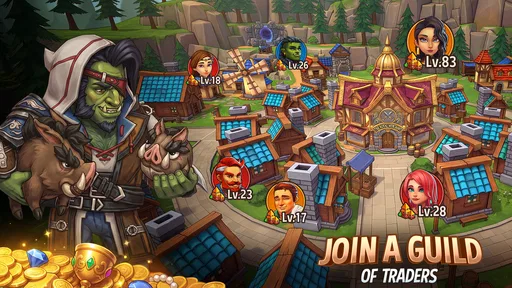
The guild feature is a meaningful option if you enjoy playing alongside other people. Trading and shared challenges add a social reason to return, but they aren’t the main attraction for everyone. If you prefer a fully solo experience, the shop’s crafting and customer loop is still the part to judge first; if the community layer is what keeps you motivated, guild participation may make the long-term routine more appealing.
When another kind of game is a better fit
Compared with a conventional idle or tycoon game, this one has more fantasy flavor and a closer link between the store and adventurers. Compared with a traditional RPG, it spends more time on making and selling than on direct hero action. That makes it a good middle ground for players who like fantasy settings but want their main decisions to concern a business. If you’re looking for fast combat, a tightly guided story, or a shop game with almost no ongoing resource decisions, I’d choose a different category instead.
There’s also a real difference between liking the idea of crafting and liking a crafting routine. Repeating production choices can be satisfying when I’m working toward a stronger, better-organized shop; it can feel repetitive when I want every session to introduce something entirely new. The events and limited-time challenges provide variety, but they also create moments when the game asks for attention on its own schedule. If that kind of timed activity stresses you out, it’s perfectly reasonable to ignore it and play at your own pace.
Who I’d recommend it to
I’d suggest it to someone who likes building a small operation into something more capable, enjoys fantasy flavor without needing a full adventure campaign, and is happy to make progress through repeated decisions. It can also work well for casual check-ins: before a commute or during a quiet break, I might review the shop, choose a sensible next task, and return later. The important point is that the game’s appeal is cumulative. It rewards attention over time more than a single long burst of play.
I’d steer away from it if you dislike resource management, prefer every task to resolve instantly, or don’t want a game to encourage regular attention through events. Players who mainly want to decorate may also find that the business and crafting decisions are just as central as the shop’s appearance. Knowing which part you enjoy most will help you decide whether the mix feels satisfying or like extra chores.
What starting out feels like
The initial setup is straightforward, and the freedom to decide what kinds of goods to focus on makes the first steps approachable. I’d resist trying to optimize everything immediately. First get a feel for how making goods, serving customers, and improving the store relate to one another; then choose a direction based on the parts you actually enjoy. That’s a more comfortable way to learn than treating every early choice as permanent.
The game is free, so trying the basic experience doesn’t require an upfront purchase. I would still decide in advance whether optional purchases fit my own spending habits, especially since the available purchase amounts cover a wide range. The useful question isn’t whether spending can make a game more convenient in general; it’s whether I’m enjoying the ordinary shop routine enough to keep playing without turning purchases into a shortcut around decisions I’d rather learn to make.
Setting Up Your Shop
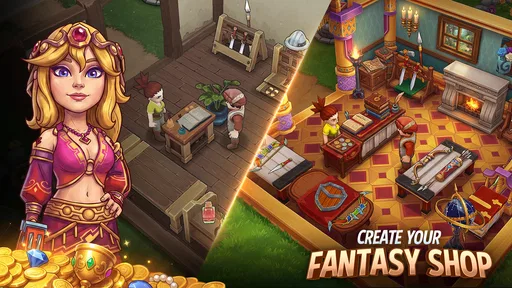
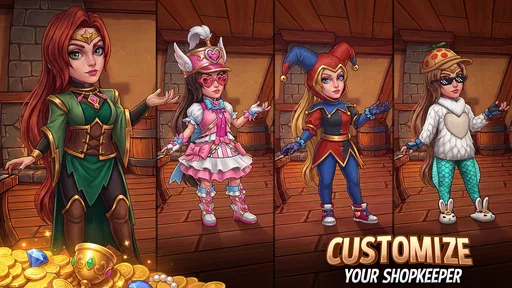
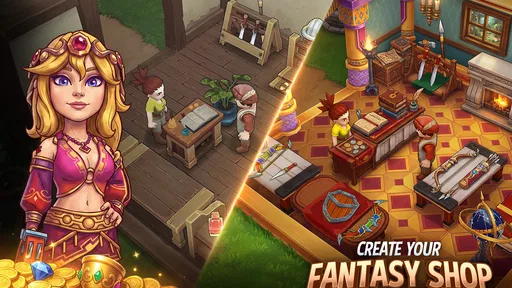
Starting out in Shop Titans: Crafting Tycoon feels like dipping your toes into a bustling medieval marketplace. The initial setup is straightforward, letting you customize your shop and decide what kind of goods you want to focus on. I really appreciated the freedom here. Whether you’re into crafting swords, brewing potions, or sewing magical garments, there’s something for everyone.
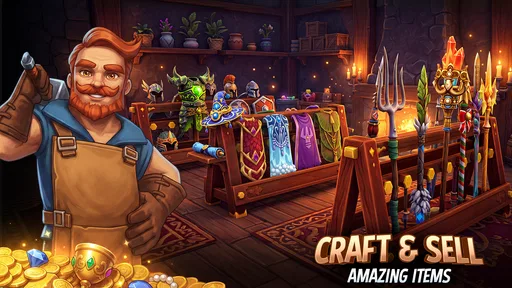
One thing that caught my attention was the variety of items you can craft. It’s like being a kid in a candy store! The crafting system is intuitive, allowing you to combine different materials to create unique items. As your shop grows, so does your catalog of items, which is super satisfying.
Engaging with Customers
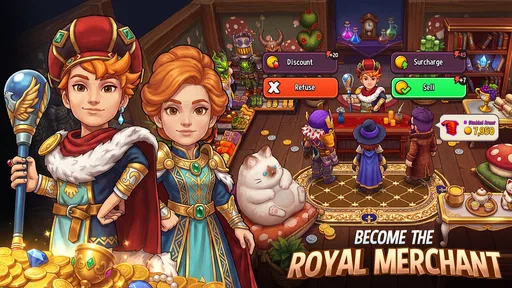
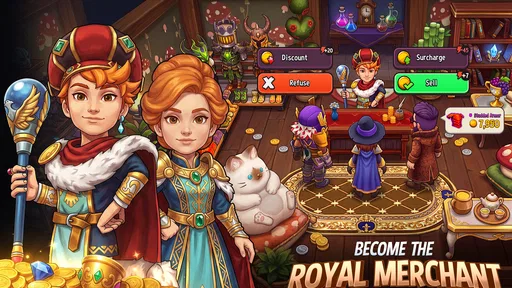
Now, let’s talk about the customers. They’re not just there to buy your wares; they have personalities and stories that add depth to the game. Interacting with them, negotiating prices, and receiving feedback makes the whole experience feel dynamic and alive. Plus, the dialogues are sprinkled with humor, which is always a nice touch.
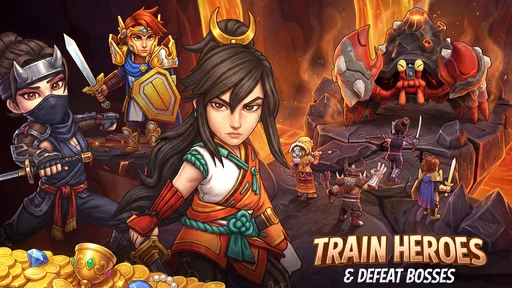
There’s also the thrill of attracting heroes to your shop. These guys are crucial because they take your crafted gear on quests, which can bring in rare materials and more business. It’s a clever loop that keeps you invested in both the crafting and the selling aspects of the game.
Growing Your Empire
As you progress, expanding your shop becomes an exciting challenge. The game offers various upgrades and decorations that not only make your shop look cool but also improve functionality. I found myself constantly tweaking my shop layout to optimize space and customer flow.
One of the coolest features is the guild system. Joining a guild allows you to trade with other players and collaborate on challenges. It adds a social layer to the game, which is great for those who enjoy a bit of community spirit in their gaming experience.
Visuals and Sound
The visuals in Shop Titans: Crafting Tycoon are vibrant and detailed, perfectly capturing the medieval fantasy setting. The character designs are quirky and memorable, adding to the charm of the game. And let’s not forget the music – it’s a catchy blend of medieval tunes that complements the gameplay nicely. I found myself humming along more times than I’d like to admit!
Challenges and Strategy
No game is complete without its challenges, and Shop Titans delivers in spades. Balancing production costs, managing resources, and keeping up with customer demands require a fair bit of strategy. It’s not just about crafting the most expensive items; it’s about crafting the right items at the right time.
The game also throws in events and limited-time challenges that spice things up. These are perfect opportunities to test your shop management skills and earn some sweet rewards. Just make sure you’re ready for the rush when they roll around!
Final Thoughts
All in all, Shop Titans: Crafting Tycoon is a delightful blend of crafting, strategy, and RPG elements wrapped in a charming package. It’s perfect for those who enjoy managing and growing something from the ground up. The pacing is just right, keeping you engaged without feeling overwhelmed.
With a 4.2 average from around 181,000 ratings and more than 13,000 written reviews, there’s clear evidence of interest in its particular mix. It has also passed 5 million installs. Those figures don’t tell me whether any one player will enjoy the repetition, but they do suggest this isn’t an obscure experiment; it’s a well-established choice for people drawn to fantasy shop management. Kabam Games, Inc. released it on June 18, 2019, and the Teen rating is worth keeping in mind when choosing a game for a younger player.
One practical question is whether I need to be online with a guild to get value from it. The guild layer is a bonus rather than the only reason to play: I’d first see whether crafting, serving customers, and improving the shop are enjoyable on their own. If I do join a guild, I’d treat trading and group challenges as another route into the game, not as an obligation that must dictate every session.
Another useful question is how to avoid turning the shop into a checklist. I’d pick one focus for each visit: check what customers need, prepare a manageable batch of goods, or make one purposeful improvement. That keeps the decisions readable and helps me notice which parts of the loop are genuinely fun. If I return and find myself only clearing tasks without caring about the shop’s direction, that’s a good sign the game may not be the right fit.
Whether you’re a seasoned tycoon or a newbie looking to dip your toes into the world of shop management, this game has something to offer. So, if you’re ready to craft, sell, and conquer the medieval market, give Shop Titans a try. You might just find yourself hooked!
Pros
- Engaging crafting mechanics keep players invested.
- Diverse character customization options available.
- Collaborative gameplay with guilds enhances experience.
- Frequent updates introduce new content and events.
- Visually appealing graphics and smooth animations.
Cons
- In-app purchases can be costly for progression.
- Energy system limits extended play sessions.
- Requires internet connection to play effectively.
- Complex mechanics may overwhelm new players.
- Guild system can be confusing for beginners.
FAQs for Shop Titans: Crafting Tycoon
What is the main objective of Shop Titans: Crafting Tycoon?
Shop Titans: Crafting Tycoon is a simulation game where players manage their own fantasy shop. The main goal is to craft, trade, and sell items to adventurers. You must strategize to supply the best equipment, hire heroes, and explore dungeons to gather resources and increase your shop's reputation.
How do the crafting mechanics work in the game?
Crafting in Shop Titans involves using gathered resources to create items for your shop. Players must balance resource management with the demand from adventurers. The game allows you to unlock new recipes and upgrade crafting stations to produce higher-quality items, which can be sold for better profits.
Is Shop Titans: Crafting Tycoon free to play?
Yes, Shop Titans: Crafting Tycoon is free to download and play on both Android and iOS platforms. However, it does offer in-app purchases for various items, boosts, and currency, which can enhance gameplay but are not necessary to enjoy the full experience.
Can you play Shop Titans: Crafting Tycoon offline?
No, Shop Titans requires an internet connection to play. The game features online components such as guild interactions, leaderboards, and events, which necessitate a connection. Players should ensure they have a stable internet connection to fully enjoy all the features the game offers.
What types of heroes can you hire in Shop Titans?
In Shop Titans, you can hire a variety of heroes, each with unique abilities and attributes. Heroes can be sent on quests to gather rare resources and treasures. As you progress, you can unlock new heroes and upgrade their skills to improve their effectiveness in battles and resource collection.


